


Why We Love Jordans
- Kwang min Choi
- Aug 7, 2024
- 4 min read

Nike and Michael Jordan's "Air Jordan" project has been ongoing since 1985 and continues to this day. Each year, new collaborations and retro releases of classic OG models are introduced simultaneously. The Jordan series is so extensive that it’s impossible to cover it all in a single post, and each individual story is vast and complex. The potential for collaborations with various designers, artists, and luxury brand houses is limitless. Nike still has many cards left to play.


Recently, Nike has been consistently collaborating with Virgil Abloh’s Off-White while also releasing retro versions of the original OG models. In this respect, Nike represents a brand that embodies the 80s and 90s American culture and fashion through its retro releases. The attitude toward the zeitgeist of vintage and American casual wear that brands like Nike and Real McCoy strive to capture is quite similar.


Collaborations with designer brands generate buzz on their own, but they also bring renewed attention to the original, or the classic. I too was swept up in this trend and ended up buying a pair of Jordan 1s. Jordans are items that quickly develop a resale market upon release, much like vintage items. The association with Michael Jordan creates significant demand due to its historical value.


Michael Jordan was known for wearing Converse or Adidas basketball shoes during high school. Unlike Nike’s thick cushioned soles, Converse and Adidas basketball shoes had thin outsoles. Jordan favored low-profile, thin basketball shoes for their superior court grip over cushioning, as cushioning technology wasn’t very advanced at the time. Brands like Vans and Converse, which used high-quality rubber for excellent grip, were popular in basketball shoes.


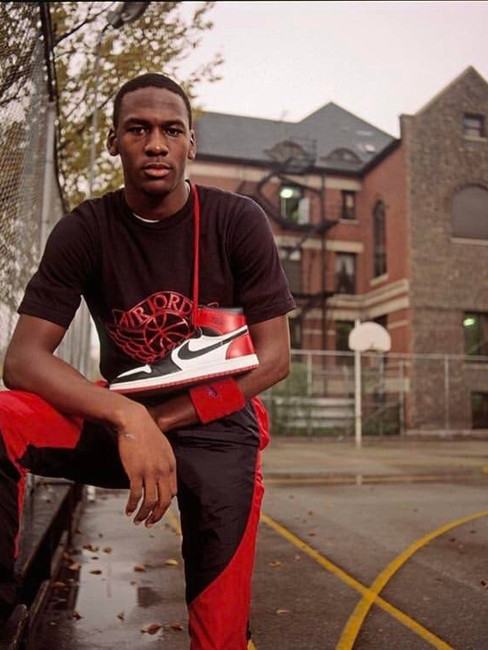


Nike created low-profile basketball shoes for Jordan. The Air Ship released in 1984 led to the collaboration between Nike and Jordan in 1985, resulting in the Air Jordan 1, designed by Peter C. Moore. Even without the Jordan label, its design stands out from other Nike shoes. At first glance, the Jordan 1 resembles Nike’s Air Force series with its leather construction and stitched outsole. However, its overall shape is more similar to Converse. In practice, it feels surprisingly low across the instep and lacks a heel. If you expect plush comfort or height boost, you might be slightly disappointed.


In the sneaker world, shoes like Adidas Stan Smiths, Superstars, Converse Chuck Taylors, and Vans Authentics are categorized as "classic sneakers." Their main commonality is that their design was already established in the 80s and 90s. As their shape remained unchanged while scaling up globally, production methods evolved. Even slight modifications were made to fit Asian foot shapes. Strictly speaking, while these classic forms continue to evolve, they always serve as references or inspirations for re-releases. Air Jordans share this classic gene.
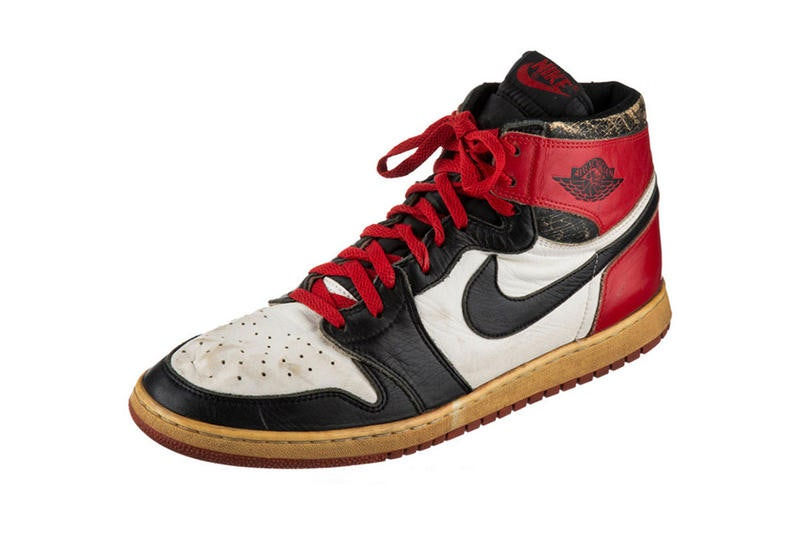
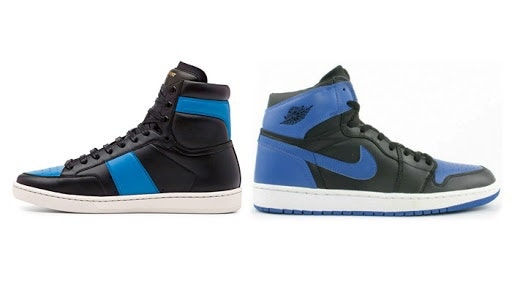
Aside from the impact Air Jordans have had on the sneaker scene and Michael Jordan’s achievements, if we focus solely on the shoe’s design, it remains impressive. I didn’t watch the NBA at the time, nor was I interested in Jordan’s street scene status. Nevertheless, I was drawn to Jordan 1 simply because it is a well-crafted shoe. The stitched outsole reminded me of well-made boots, and its sleek, low profile was reminiscent of elegant dress shoes. It was more than just "hip"; it had a certain sexy allure. After all, Jordan is a shoe and a form of clothing, adding joy to the way we dress.


A Style from Popeye Magazine April Issue
Pairing Jordans with military chinos.
For me, shoes are like the "foundation stones" of an outfit. Pants are like the pillars built on top of them. Especially in conservative men’s fashion where skirts are not worn, shoes and pants are fundamental. Most of the time, our lower body makes up a larger proportion of our appearance. Therefore, "bottoms" are important. Shoes, although an accessory, are still considered part of the lower body’s clothing. The connection between pants and shoes is a crucial element in styling.
Jordans pair exceptionally well with denim. They’re so desirable that it’s hard to find them available.
Shoes that match well with pants are often classic staples, and these classics in fashion are not just limited to suits and dress shoes. Classics in fashion are items whose forms were fixed in the past but continue to be appreciated for their beauty and practicality today. Jordans fit this classic category.





Photo 1. : Attempts to Mimic Popeye’s Style but failed it 😭
Photo 2,3. : Jordans with less stylish 60s U.S. military cargo pants.
Photo 4 : Jordans with 90s Levi’s black jeans.
Photo 5 : Jordans substituting for dress shoes with 80s American-made Levi’s jeans,
a well-tailored shirt, jacket, and knitted tie.
When I wear Jordans, I approach them as if I were wearing dress shoes. The comfort is not significantly different (though slightly less comfortable). Just as you would wear deck shoes with a formal outfit that needs Oxford shoes, or envision wearing a sleek Chelsea boot or sturdy boot, I treat Jordans in a similar way (I might need a pair of Chelsea boots to save my Jordans for special occasions😭).

Wearing Jordans doesn’t mean you need to replicate the styles of those who wore them in the 80s and 90s. While the street scene has brought Jordans into high fashion, they’re not solely a streetwear item. Just as classic suits from a hundred years ago are enjoyed by people beyond those who lived in that era, Jordans are loved by people of all ages today.

everyone has their own interpretation of Jordans. This variety in interpretation is endless. We don’t need to fully experience a past we didn’t live through. I love vintage and fashion, but I see fashion as more of a play than a history lesson.
For those who have tried Converse or Vans, or even dress shoes, Jordans might be a fresh shock. There’s no need to overhaul your style for Jordans—just casually incorporate them into your existing wardrobe! Oh, I want to buy another pair of Jordans.
Written by Choi Kwang-Min


Comments